

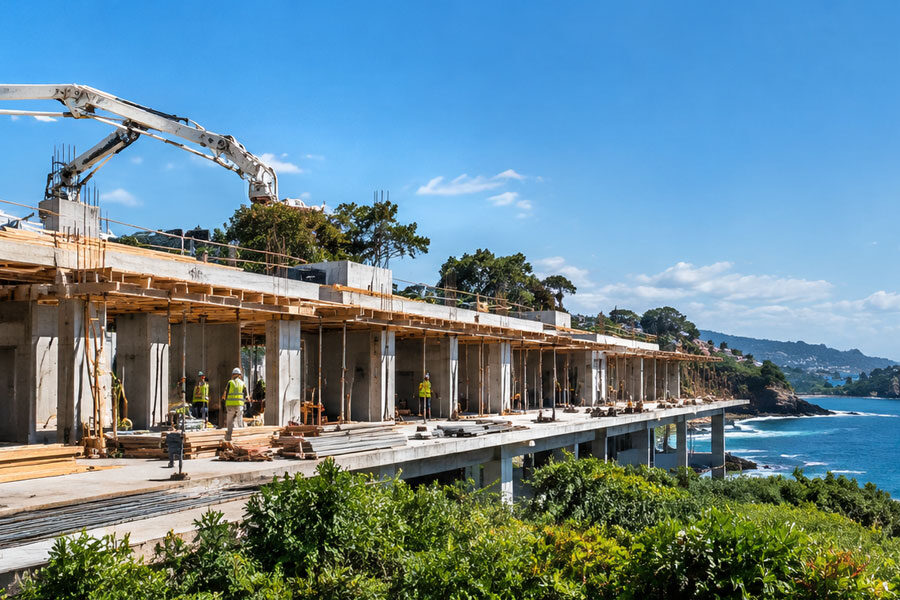
How to Choose the Right Contractor for Your Construction Project
Choosing the right contractor is one of the most important decisions you will make when planning a construction project. Whether you intend to build a private villa, a residential property, a commercial building, or a luxury resort, the contractor you select will directly influence construction quality, project costs, completion time, and long-term building performance.
A well-managed construction project requires more than skilled workers and quality materials. It also depends on effective planning, technical expertise, clear communication, and careful coordination between developers, architects, engineers, and suppliers. Therefore, selecting a contractor based solely on the lowest quotation can expose your project to unnecessary risks.
In growing property markets such as Bali, Lombok, and Sumba, developers must also consider local construction conditions, material availability, weather patterns, and infrastructure requirements. Furthermore, projects that involve Mechanical, Electrical, and Plumbing (MEP) systems require specialized technical coordination to ensure that every building component operates safely and efficiently.
This guide explains how to choose the right contractor for your construction project, evaluate potential candidates, compare proposals, and establish a professional working relationship that supports successful project delivery.
1. Define Your Construction Project Requirements
Before contacting contractors, establish a clear understanding of your project’s objectives. A well-defined scope helps contractors prepare accurate proposals and allows you to compare their capabilities more effectively.
Determine the Type of Construction Project
Start by identifying the building type and its intended purpose. Residential construction, hospitality developments, and commercial properties have different technical requirements, construction methods, and operational priorities.
For example, a private villa may prioritize architectural design, privacy, energy efficiency, and indoor comfort. Meanwhile, a hotel or resort may require more extensive MEP installations, commercial kitchens, laundry facilities, water treatment systems, and fire protection infrastructure.
Similarly, an office building may need flexible electrical distribution, reliable air conditioning, data infrastructure, and efficient lighting systems.
Once you understand these requirements, you can identify contractors with relevant experience and the technical resources necessary to complete the work.
Prepare a Detailed Scope of Work
A scope of work explains what the contractor must deliver. It should describe the construction activities, materials, equipment, technical specifications, project boundaries, and expected completion requirements.
Depending on the project, the scope may include site preparation, structural construction, roofing, interior finishes, electrical installations, plumbing, HVAC systems, and external landscaping.
In addition, clarify which activities fall outside the contractor’s responsibilities. For instance, some contractors may exclude architectural design, building permits, furniture procurement, or specialized equipment from their quotations.
By documenting these details early, you reduce misunderstandings and make it easier to evaluate competing proposals.
Establish Your Budget and Timeline
Determine your available budget and target completion date before requesting quotations. Your budget should account for design fees, construction expenses, equipment, permits, utility connections, and other project-related costs.
Furthermore, allocate a contingency allowance to accommodate unexpected site conditions, approved design changes, or material price fluctuations.
Your timeline should also reflect realistic construction durations. Complex buildings and projects involving specialized equipment may require longer procurement periods, additional testing, and more extensive commissioning activities.
2. Look for Relevant Experience and Technical Expertise
Not every contractor specializes in the same type of construction. Therefore, you should prioritize candidates whose experience matches your project’s complexity and technical requirements.
Review Previous Construction Projects
Ask potential contractors to provide examples of completed projects similar to yours. Examine the building type, project scale, construction scope, and role the contractor performed.
For example, a contractor who has completed several villas may understand residential construction well. However, a large hospitality development may require additional experience in centralized HVAC systems, fire protection, commercial electrical distribution, and water management.
Moreover, reviewing previous work helps you assess the contractor’s attention to detail, material selection, and overall construction standards.
Whenever possible, request references from previous clients or arrange a site visit to an existing project. These steps can provide useful information about the contractor’s reliability and workmanship.
Verify Qualifications and Business Credentials
Before signing an agreement, verify the contractor’s business identity, relevant qualifications, and applicable licenses or certifications. In Indonesia, construction service providers must meet the licensing and certification requirements relevant to their activities and project scope.
The exact requirements may vary depending on the nature and scale of the work. Consequently, developers should confirm the applicable rules with the relevant authorities or qualified construction professionals.
You should also review the contractor’s organizational structure and technical personnel. A professional team should be able to explain who will manage the project, supervise construction activities, coordinate subcontractors, and monitor quality.
Evaluate Specialist Capabilities
Some projects require expertise beyond general construction. For example, MEP-intensive buildings depend on coordinated mechanical, electrical, and plumbing installations.
If your project includes these systems, ask whether the contractor manages MEP work directly or appoints specialist subcontractors. Both approaches can work effectively, provided the responsibilities remain clear and the project team coordinates the different disciplines properly.
Ultimately, the contractor’s capabilities should match the technical demands of your development.
3. Evaluate the Contractor’s Reputation and Reliability
A contractor’s reputation can reveal how effectively the company manages projects, communicates with clients, and resolves problems.
Request Client References
Ask for contact details of previous clients who have agreed to provide references. When speaking with them, focus on practical questions rather than general impressions.
For instance, ask whether the contractor followed the agreed schedule, communicated delays promptly, managed unexpected costs transparently, and completed the work according to the contract.
You should also ask how the contractor responded when problems occurred. Construction projects can encounter unexpected challenges, so the ability to identify issues and implement corrective actions is an important indicator of professionalism.
Check Reviews and Project Documentation
Online reviews and business profiles can help you identify patterns in customer feedback. Nevertheless, do not rely exclusively on ratings or promotional materials.
Instead, compare available reviews with project photographs, references, documentation, and direct conversations. Confirm that the contractor actually performed the work shown in its portfolio and understand the scope of its involvement.
Additionally, examine whether the company provides clear quotations, formal agreements, progress reports, and documented quality checks.
Assess Communication from the Beginning
The contractor’s communication style during the initial discussions often indicates how the company may handle the project later.
A reliable contractor should respond to questions clearly, explain technical issues in understandable language, and identify information needed before preparing a quotation.
If a contractor repeatedly avoids specific questions, provides inconsistent explanations, or promises unrealistic results without reviewing the project details, investigate further before proceeding.
4. Compare Quotations Beyond the Lowest Price
Price matters, but the cheapest quotation does not automatically represent the best value. Differences in materials, labor, technical specifications, and excluded activities can create significant cost variations between contractors.
Review the Breakdown of Costs
Request an itemized quotation that separates major construction activities, material costs, labor, equipment, and other relevant expenses.
A detailed breakdown helps you understand how the contractor calculated the proposed price. It also allows you to identify missing items, unusually low allowances, and costs that may appear later as additional charges.
For example, one contractor may include complete electrical and plumbing installations, while another may cover only basic provisions. Although the second quotation appears cheaper, the total project cost could become higher after you add the excluded work.
Compare Materials and Technical Specifications
Two quotations may list similar construction activities but specify different materials or equipment.
Therefore, compare product quality, dimensions, performance requirements, warranty conditions, and installation methods. For MEP systems, examine the proposed HVAC equipment, electrical components, pumps, piping materials, and control systems.
Where contractors propose alternative products, ask them to explain the differences in performance, durability, maintenance requirements, and total ownership costs.
This comparison helps you avoid selecting a quotation that reduces the initial budget at the expense of long-term reliability.
Identify Exclusions and Potential Additional Costs
Read the quotation carefully to identify excluded activities and assumptions. Common exclusions may involve soil improvement, retaining walls, utility connections, temporary facilities, specialist testing, landscaping, or building services.
Additionally, clarify how the contractor will price changes to the original scope. A written variation process should explain how the parties approve additional work and calculate its cost before implementation.
By addressing these issues early, you can make a more informed comparison and reduce the risk of budget disputes.
5. Understand the Construction Contract
A written contract establishes the responsibilities of the developer and contractor. It provides a reference for managing payments, changes, deadlines, quality requirements, and disagreements throughout the project.
Define the Scope and Deliverables
The contract should clearly describe the work the contractor must complete. Include approved drawings, specifications, material standards, project milestones, and required handover documents where applicable.
Furthermore, identify the responsibilities of each party. For instance, the agreement should clarify who obtains specific approvals, coordinates consultants, supplies owner-selected materials, and arranges utility connections.
Clear responsibilities help prevent gaps between different project participants.
Establish Payment Terms
Payment arrangements should correspond to agreed milestones or verified progress rather than relying on vague verbal promises.
For example, the contract may establish payments for mobilization, structural completion, MEP installation, finishing works, and final handover. The exact arrangement should reflect the project’s commercial terms and applicable legal requirements.
Before releasing a payment, verify that the contractor has achieved the corresponding milestone and provided any required supporting documentation.
You should also clarify the treatment of advance payments, retention amounts where applicable, taxes, and final settlement.
Include Schedule, Warranty, and Dispute Provisions
The contract should state the agreed completion date, milestone schedule, and procedure for handling delays. It should also explain how the parties will address changes, defective work, and circumstances beyond reasonable control.
In addition, clarify the warranty obligations for construction work and installed equipment. Different components may have different warranty terms, so the agreement should identify the applicable conditions.
Finally, include a process for resolving disputes. For significant developments, consider obtaining legal advice before signing the contract.
6. Assess Project Management and Communication Systems
Effective project management helps keep construction activities organized and ensures that the project team works toward shared objectives.
Confirm Who Will Manage the Project
Ask who will serve as the primary contact during construction. Depending on the project, this person may be a project manager, site manager, or construction supervisor.
You should understand their responsibilities, availability, reporting structure, and authority to make decisions. A clearly defined management structure allows the team to resolve issues without unnecessary delays.
Establish Regular Progress Meetings
Schedule regular meetings to review construction progress, procurement, quality, safety, budget, and upcoming activities.
During these meetings, compare actual progress against the approved schedule. If delays occur, ask the contractor to explain the cause and propose corrective actions.
Written meeting notes should record decisions, responsible parties, and deadlines. Consequently, everyone can refer to the same information when following up on outstanding issues.
Use Clear Documentation and Reporting
Construction projects generate drawings, technical submittals, inspection records, material approvals, and change requests. An organized document management process helps prevent outdated information from reaching the site team.
Progress photographs and written reports can also help developers monitor work when they cannot visit the site regularly.
For projects involving multiple consultants and subcontractors, clear documentation becomes especially important because changes to one building system may affect several other activities.
7. Check Quality Control and Safety Procedures
Construction quality and site safety should remain priorities throughout the project. A contractor must have suitable procedures for checking workmanship, managing materials, and reducing risks to workers and other people on-site.
Review Quality Assurance Procedures
Ask how the contractor inspects materials, verifies installation methods, and documents completed work.
A structured quality process should identify inspection points before critical activities proceed. For example, teams should inspect concealed electrical conduits, plumbing connections, waterproofing, and reinforcement before covering them with finishes or concrete.
Likewise, contractors should resolve identified defects and maintain records of corrective actions.
Evaluate Site Safety Management
Construction activities involve risks associated with working at height, electrical installations, lifting operations, machinery, and material handling.
Therefore, review the contractor’s safety procedures, worker training, protective equipment, site supervision, and incident reporting arrangements.
The contractor should also explain how it manages subcontractors and visitors. Appropriate safety management protects workers, supports smoother operations, and helps reduce preventable disruptions.
Verify Testing and Commissioning Arrangements
A building should not be considered complete merely because the visible construction work has finished. The contractor must also verify that the relevant systems operate correctly.
Depending on the scope, testing may include electrical safety checks, plumbing pressure tests, HVAC performance verification, drainage checks, and fire protection system testing.
For MEP-intensive projects, commissioning and system coordination are particularly important. Before handover, request the relevant test reports, operating manuals, and as-built drawings.
8. Consider Local Construction Conditions in Bali, Lombok, and Sumba
Projects in different locations may face different logistical and environmental challenges. Consequently, selecting a contractor with an understanding of the local construction environment can provide practical advantages.
Evaluate Material Logistics and Supply Chains
Some building materials and specialist equipment may need to travel from other regions. Delivery schedules can influence construction progress, especially when projects require imported products or specialized MEP components.
An experienced contractor should identify long-lead items early, confirm supplier availability, and coordinate procurement with the construction schedule.
Additionally, the contractor should have a plan for storing materials safely and protecting them against moisture, damage, and theft.
Plan for Tropical Weather Conditions
High humidity, intense sunlight, and heavy rainfall can affect construction methods, material storage, exterior finishes, and site accessibility.
Contractors should plan weather-sensitive activities carefully and implement appropriate temporary drainage and protection measures.
For coastal developments, the team should also consider corrosion-resistant materials and suitable protection for exposed mechanical and electrical equipment.
These measures can improve construction quality and reduce future maintenance requirements.
Confirm Local Infrastructure Requirements
Before construction begins, confirm the availability of water, electricity, drainage, telecommunications, and road access. Where existing infrastructure cannot support the proposed building, the project may require additional systems.
For example, some developments may need water storage, pressure pumps, wastewater treatment, or specialized electrical infrastructure.
Discussing these requirements early allows the contractor and engineering team to include them in the design, budget, and construction plan.
9. Understand the Importance of Integrated MEP Coordination
Mechanical, Electrical, and Plumbing systems are essential to the safety, comfort, and functionality of modern buildings. Therefore, developers should ensure that their contractor can coordinate these systems with the architectural and structural design.
Coordinate MEP Systems Before Installation
HVAC ducts, electrical cable trays, water pipes, drainage lines, and fire protection equipment often occupy the same ceiling and service areas.
Without proper coordination, these installations can conflict with structural elements or other building services. Resolving such problems after installation may require expensive rework.
A coordinated design helps identify potential clashes and ensures that technicians can access equipment for inspection and maintenance.
Prioritize Energy Efficiency and Long-Term Performance
The contractor and engineering team should evaluate how the proposed systems will perform during daily operation.
Efficient HVAC equipment, appropriate lighting controls, water-saving fixtures, and well-designed electrical distribution can reduce operating costs when properly selected and installed.
However, equipment efficiency alone does not guarantee good performance. Proper installation, commissioning, user training, and routine maintenance remain essential.
Plan for Future Maintenance
A professional contractor should consider service access and equipment replacement during construction. Mechanical rooms, electrical panels, valves, filters, and pumps need sufficient clearance for safe maintenance.
In addition, developers should receive the technical documentation necessary to operate and maintain the completed building.
This preparation helps protect the investment and reduces the likelihood of unnecessary disruption after occupancy.
10. Recognize Warning Signs Before Hiring a Contractor
Although many contractors operate professionally, developers should remain alert to warning signs during the selection process.
Be cautious when a contractor refuses to provide a detailed quotation, avoids written agreements, or cannot demonstrate relevant project experience. Similarly, unrealistic promises about completion times may indicate that the contractor has not properly assessed the work.
Another concern arises when a contractor demands unusually large payments without clear contractual justification or refuses to document changes to the scope.
Poor communication, unexplained pricing differences, and unwillingness to discuss quality control also deserve attention.
However, one concern does not necessarily prove that a contractor is unsuitable. Instead, evaluate the overall evidence, request clarification, and verify important claims before making a decision.
11. Use a Structured Process to Make Your Final Decision
After evaluating several contractors, compare their proposals using consistent criteria. This approach helps you make a decision based on overall suitability rather than personal impressions alone.
Consider the following factors:
Relevant experience: Has the contractor completed projects with similar requirements?
Technical capability: Can the team manage the required construction and MEP scope?
Quotation transparency: Are the costs, specifications, and exclusions clearly documented?
Project management: Does the contractor have a practical schedule and reporting process?
Quality and safety: Can the company explain its inspection and safety procedures?
Communication: Does the team respond clearly and professionally?
Contract terms: Are payment arrangements, responsibilities, warranties, and change procedures documented?
Long-term value: Does the proposal support durability, maintainability, and efficient operation?
You may also assign a weighted score to each factor based on your priorities. For example, a project with complex MEP requirements may place greater emphasis on technical expertise, while a smaller renovation may prioritize cost transparency and schedule flexibility.
Ultimately, choose the contractor who offers the strongest combination of technical capability, reliability, clear communication, and overall value.
Conclusion
Choosing the right contractor for your construction project requires careful evaluation, clear planning, and informed decision-making. By defining your project requirements, reviewing relevant experience, comparing detailed quotations, and establishing a comprehensive contract, you can reduce uncertainty and create a stronger foundation for successful construction.
Furthermore, effective project management, quality control, safety procedures, and MEP coordination help ensure that the completed building meets its intended purpose. Developers should also consider local conditions, material logistics, tropical weather, and long-term maintenance when evaluating contractors.
For projects in Bali, Lombok, and Sumba, selecting a contractor who understands both construction execution and building services can make a significant difference to project delivery and operational performance.
CV Perintis Kreasi Mandiri provides integrated construction and MEP solutions for residential, commercial, and hospitality developments across Bali, Lombok, and Sumba. Our team focuses on technical coordination, quality execution, and practical solutions tailored to each project’s requirements.
Planning a villa, hotel, resort, or commercial building? Contact CV Perintis Kreasi Mandiri to discuss your construction objectives and explore the right approach for your next project.